Friday, April 20, 2012

Xuban Nafarrate brings video-evidence to court: he was hit with a rubber bullet too

Xuban Nafarrate, the Basque citizen who almost died after being hit with a rubber bullet shot by the Basque Autonomous Police Corps, Ertzaintza, in the context of a informative picket at a commercial center in Vitoria-Gasteiz, is bringing video-evidence to court to show that he was shot on the head with a rubber bullet from short distance.

As result of the injuries, Xuban Nafarrate was for some 15 minutes agonizing on the floor, spasming unconsciously, foam-drooling, peeing on itself, while his friend was being bullied by a Spanish Nationalist masked police agent (judging from what he said), who threatened him with hitting him on the head and mocked the injured Xuban who, in his imbecile mind, had "peed out of fear". Then this same policeman (who should be in jail or at least suspended according to all common sense, law, etc. - but nope) took a sticker from Xuban's friend's shirt and put it on his mouth, gagging him. When he came to know that Xuban studied History he idiotically ranted "he surely studies the history of ETA". 

After he was finally attended by an abulance, Xuban spent six days in hospital, some of them struggling between life and death. He was however luckier than Iñigo Cabacas, who died from a very similar police aggression barely weeks later. Aggression that has not been clarified either nor put any cop in jail. 

Source: Gara[es].

Fukushima worse than Chernobyl: apparent in faster, greater damage to wildlife


By Miguel Llanos, msnbc.com 

Scientists are focusing on Japan's Fukushima area after a study published this week found an alarming development at another nuclear disaster site -- Chernobyl.

The proportion of female birds has fallen off since the 1986 disaster at Chernobyl, the study found, and that appears to be causing male birds to increase their chirping in efforts to find a mate.

"The Chernobyl zone is a population sink, or an ecological trap, that brings in new birds each year but these birds suffer lower survival," co-author Tim Mousseau, a University of South Carolina biologist, told msnbc.com.

"In other words," he said, "the Chernobyl zone is not an eden for wildlife" as some have claimed.

(...)

He's expecting even worse results at Fukushima.

A team did an initial survey last summer, counting 1,929 birds from among 45 species.
"Our expectation was that it would take many years and many generations of exposure for the cumulative effects" to show as they have in Chernobyl, Mousseau said.

"However, once we started our field work we realized that contamination levels were much higher than expected, even in July when we did our surveys," he said, "and it is likely that doses to these birds were very high in March and April when many of the birds were arriving to the area to initiate breeding."

Full story at MSNBC World News.

EU-made pellets used against Bahraini citizens


April 18, 2012 

Bahrain Watch Identifies Cyprus, UK, and Italian Birdshot, and Other Live Ammunition

[Manama] Activist group Bahrain Watch has observed a dramatic escalation in the use of birdshot and live ammunition by police against protesters over the past week, as well as a marked increase in related injuries.  Many individuals are reported injured in the back, raising serious questions about whether police are using proportional force and are discharging their firearms only as a last resort, as required by Bahrain’s new police code of conduct.  Meanwhile, new video shows policemen laughing as they repeatedly beat an arrestee with their shotguns, the result of continuing impunity.

Bahrain Watch has identified six birdshot manufacturers, and four manufacturers of live ammunition whose products have been used in Bahrain.  The widespread use of these types of ammunition to control protests and riots makes Bahrain an international pariah in policing.  

... full story at Bahrain Watch.


Serious concern about persistent deformities in Gulf of Mexico fauna

Florida Oil Spill Law mentions today that:

Discovering eyeless shrimp, lesioned fish and other mutated and underdeveloped seafood, fisherman in the Gulf are pointing fingers at the BP spill. Biologist Dr. Darryl Felder told the news agency that Gulf seafood populations are dropping at alarming rates and that species richness is "diminished."

And that:

Open sores. Parasitic infections. Chewed-up-looking fins. Gashes. Mysterious black streaks. Two years after the drilling-rig explosion that touched off the biggest offshore oil spill in U.S. history, scientists are beginning to suspect that fish in the Gulf of Mexico are suffering the effects of the petroleum. 

The true impact of the worst peacetime oil catastrophe ever (and the mismanagement by means of massive use of dispersants, mostly illegally, which surely only aggravated the problem) is only now unfolding.

Link 1, link 2.

The myth of 'free market' efficiency (Paul D'Amato at Socialist Worker)


It's true that capitalist competition provides incentives, but not for the capitalists to produce things human beings need. It's to make greater profits. 

"WITHOUT CAPITALIST competition, creativity and invention would stagnate. There wouldn't be an incentive for people to work."

This is one of the oldest arguments against socialism. The implication is that capitalist market competition encourages creativity, efficiency and hard work.

Karl Marx and Frederick Engels dealt with the question as far back as The Communist Manifesto in 1848. "It has been objected," they wrote, "that upon the abolition of private property all work will cease and universal laziness will overtake us."

Marx and Engels' answer is as simple as it is devastating. "According to this," they wrote, "bourgeois society ought long ago to have gone to the dogs through sheer idleness; for those of its members who work, acquire nothing, and those who acquire anything, do not work."

While it's true that capitalist competition acts as a spur to increase production, it's also an extremely wasteful system. One need only think of the multibillion-dollar advertising industry or the military-industrial complex to see how much labor is wasted on essentially worthless enterprises.

Imagine what the hundreds of billions of dollars spent on weapons of mass destruction or on ads to convince us to buy one brand of, sugar water over another could do in fixing crumbling schools, providing universal health care and cleaning up environmental degradation.

Moreover, because capitalist enterprises depend on increasing profits and market share, they must continually sell their products in ever greater quantities.

There is therefore a built-in incentive on the part of capitalists to produce things that don't last. Think of the college textbook industry where the same $60 book is reissued with a new introduction and rearranged chapters in order to prevent students from using older editions.

- - - - - - - - - - - - - - - -

THE HEALTH care business is probably the most distressing example of what happens when we "let the market decide." Health care for profit means delivering the least amount of health care service for the maximum amount of money.

... full article at Socialist Worker.

Modern day slavery in the USA (J.B. Freeman at AlterNet)


Nearly a million prisoners are working in call centers, working in slaughterhouses, or manufacturing textiles while getting paid somewhere between 93 cents and $4.73. 

Sweatshop labor is back with a vengeance. It can be found across broad stretches of the American economy and around the world. Penitentiaries have become a niche market for such work. The privatization of prisons in recent years has meant the creation of a small army of workers too coerced and right-less to complain. 

Prisoners, whose ranks increasingly consist of those for whom the legitimate economy has found no use, now make up a virtual brigade within the reserve army of the unemployed whose ranks have ballooned along with the U.S. incarceration rate. The Corrections Corporation of America and G4S (formerly Wackenhut), two prison privatizers, sell inmate labor at subminimum wages to Fortune 500 corporations like Chevron, Bank of America, AT&T, and IBM. 

These companies can, in most states, lease factories in prisons or prisoners to work on the outside. All told, nearly a million prisoners are now making office furniture, working in call centers, fabricating body armor, taking hotel reservations, working in slaughterhouses, or manufacturing textiles, shoes, and clothing, while getting paid somewhere between 93 cents and $4.73 per day. 

Rarely can you find workers so pliable, easy to control, stripped of political rights, and subject to martial discipline at the first sign of recalcitrance -- unless, that is, you traveled back to the nineteenth century when convict labor was commonplace nationwide. Indeed, a sentence of “confinement at hard labor” was then the essence of the American penal system. More than that, it was one vital way the United States became a modern industrial capitalist economy -- at a moment, eerily like our own, when the mechanisms of capital accumulation were in crisis.

... full story at AlterNet.

Thursday, April 19, 2012

Basque Country: 18 arrested in Navarre for the March 29 general strike

Ateak Ireki[es] reports that at least 12 (could be more) people have been arrested today in Iruñerria (the urban area of Pamplona). They are all accused of public disorders in the May 29th general strike journey. Other four people were arrested in the previous days. 

Popular organizations are already preparing mobilizations in protest for these attacks by the bourgeois  repressive forces.

Update: Spanish Government Delegation says that 14 have been arrested today (18 with the four of previous days), seven of them minors (source AI[es]).

Update: One of the minors is only 14 and was arrested at school. Dozens of grassroots organizations have gathered forces to show the social rejection of these police abuses and have held a press conference at the centric Hotel Tres Reyes of Pamplona[eu/es]:


Partial transcript of the press conference:

Anywhere on Earth where there is a minimal system of liberties, police and judiciary authorities send citations to proceed to take declarations to the persons accused of committing acts like these. However in the Spanish State police is sent to arrest them violently in their homes, their jobs or even minors are arrested at schools. 

These attitudes evidence the lack of democratic culture by the public powers and demand urgently a public in-depth debate on which measures to take to respect the most basic civil and political rights of the citizenry.

As you can see at the end of the video, after the press conference people went to the police station demanding the release of those arrested.

Source: Ateak Ireki[es] (again).


3,000 euros for wearing the Medieval Navarrese banner

But of course repression is much more generalized and persistent. For example 3,000 euros (some $4000) of fine are being asked at court to a football aficionado who wore a shirt of the local team Osasuna with the Arrano Beltza (black eagle, right), one of the more popular traditional symbols of Navarre, used by Sancho the Great. (Source: AI[es])

USA: Two years after the BP oil spill, is the Gulf ecosystem collapsing? (G. Washington at Naked Capitalism)


The Gulf Ecosystem Is Being Decimated

The BP oil spill started on April 20, 2010. We’ve previously warned that the BP oil spill could severely damage the Gulf ecosystem.

Since then, there are numerous signs that the worst-case scenario may be playing out:
  • A recent report also notes that there are flesh-eating bacteria in tar balls of BP oil washing up on Gulf beaches
If you still don’t have a sense of the devastation to the Gulf, American reporter Dahr Jamail lays it out pretty clearly:


“The fishermen have never seen anything like this,” Dr Jim Cowan told Al Jazeera. “And in my 20 years working on red snapper, looking at somewhere between 20 and 30,000 fish, I’ve never seen anything like this either.”

... full story at Naked Capitalism. 

Alternative currency in Volos (Greece)

As happened in Argentina a decade ago, crisis ravaged Greece is being forced to look for alternatives to Capitalist structures in order to survive. They have developed a system of credits by which they can offer and get products and services outside the official EU-IMF bourgeois economy and without using the now most scarce euros.


From Ex-SKF.

German Public TV exposes the criminal lies of the Japanese Government on Fukushima (DW)


The Japanese government doesn't seem to be doing a good job providing information about the situation in Fukushima - at least that's how Junko Naggai sees it. That's why she created an information site on the web. Though the 78-year-old is a long-time German resident, she has decided to create her website in Japanese language.

"I didn't know it would be so bad, that there would be so little information. That was a bit of a shock to me," Naggai says in Berlin.

The former TV moderator was invited to a discussion by the Lutheran Church and various NGOs in Berlin to talk about the Japanese government's handling of the nuclear disaster in Fukushima. Among other things, he explains how radiation measurements in Fukushima are manipulated.

"The top surface is removed and the area is cleaned with water before the Geiger counters are used," he says.

... full story at DW (found via EneNews).


British disabled people protest against Cameron's heist against the poor (Random Pottins)


THERE was a BBC reporter in Trafalgar Square today, talking about - what else? - the Olympics. Not that anything was going on so far as I could see. But while both the Beeb and ITN were doing their best to arouse interest in the costly Games to come, something was happening around the corner and off camera, which perhaps we were not meant to see.

Disabled people, many of them in wheelchairs, blocked two busy road junctions around the square by chaining themselves and their chairs together in a line, with security locks. They were protesting the Con Dem government's welfare reforms, the use made of firms like Atos to declare people "fit for work" in order to deprive them of benefits, and the planned closure of Remploy factories which currently employ 2,000 people.

As a south London Remploy worker told a meeting of trade unionists recently "We won't go quietly into the night. We won't go quietly anywhere".

Planned cuts to the Disability Living Allowance could see 500,000 disabled people losing money, the charity Mencap has said.

Today's demonstration was organised by Disabled People Against the Cuts (Dpac). It lasted for two hours before police had to use bolt cutters to remove the chains. A BBC report had mentioned "traffic delays" in the vicinity without giving the reason.

... full story at Random Pottins.

Catalonia: in 3 years six people lost eyes for rubber bullet attacks by police: not a single culprit has even been identified

Much less punished. 

The rubber bullets controversy is not but the tip of the iceberg of the outrageous impunity that Spanish police corps enjoy with the help of bad laws and even worse judges. But it is also a very obvious example of this impunity that also extends to very frequent arbitrary arrests, with systematic false accusations and, way too often abuses and even cruel tortures. And they never ever identify themselves.

In the accompanying video (source: Bilboko Branka) Nicola Tanno and Carles Guillot, both victims of rubber bullets, explain (in Spanish) the situation of systematic impunity for police forces, totally incompatible with the concepts of democracy and human rights.

They complain that police is every day more attacking with total impunity peaceful protests, which are more and more systematically repressed, and how the mainstream media does not even bother finding out the truth but assumes by default that, if police charges, is because their victims (who are capriciously criminalized) deserve it somehow.

We enter now, if this situation of growing systematic abusive repression continues a point of no return in which anything resembling democracy has been finally destroyed for good. 


Wednesday, April 18, 2012

Bahraini regime increases repression before international F1 match: FIA culprit! (BCHR)


18 April 2012

In an attempt to silence the prodemocracy movement which started in Bahrain on 14 Feb last year, the Bahraini authorities have escalated their violent crackdown against pro-democracy protesters and human rights activists. Villages and houses have been attacked continuously for the past few days. Pre-dawn house raids are being conducted and dozens of protesters are either arrested or wanted for arrest. As F1 is approaching, human rights activists in Bahrain Center for human rights are being targeted with arrests and prosecution, in an effort to undermine thier work in reporting the violence against protesters during the F1.

On 15 April 2012, Sayed Yousif Al Mahafdha, the head of monitoring cases and documentation in BCHR, accompanied with two members of Human Rights Watch (HRW), Tom Malinowski, Washington Director and Nadim Houry, deputy director of ME and North Africa division, were attacked then arrested while observing a peaceful protest in Duraz, one of Bahrain’s villages. According to Sayed Yousif when the protestors against F1 reached the main road, 6 police vehicles approached the protest. Riot police stepped down and started to violently suppress the protest by shooting teargas and stun grenades at protesters. For the safety of HRW members, Al Muhafdha took them to a nearby house where other protesters were also taking shelter in. Sayed Yousif stated that riot police “stormed the house, sprayed pepper spray in our faces and punched me on the back”. Sayed Yousif, Tom Malinowski, Nadim Houry and the protestors were taken to Budaiya police station and kept there for 4 hours before being released. Families of the detainees were attacked with teargas and stun grenade for inquiring about their relatives. 

Arrest of Nabeel Rajab

Nabeel Rajab, president of BCHR and Ratiu Democracy Award Winner, was arrested several times in the past months for exposing human rights abuses and practicing his right of freedom of expression and peaceful assembly. On 31 March 2012, he was arrested yet again and held for several hours. His crime according to the government is “participating in illegal assembly” and calling others to join, as he was protesting in the capital Manama against the detention of human rights defender Abdulhadi Al Khawaja who is now on hunger strike for 70 days. Nabeel Rajab was summoned for his first court hearing on 6 May 2012 with the same charges. He was charged as per Bahrain’s penal code and assembly code which has been criticized by local and international human rights[1] for its limitation to the freedoms of assembly and expression. The Assembly law states that police can lawfully disrupt a public gathering even if the participants are simply exercising basic rights like freedom of expression and freedom of association. It also stated in its article 11 that “No one shall organize demonstrations or marches or rallies that are held or going near shopping malls”. The law set a penalty of imprisonment or a fine for calling or participating in un-notified marches.”[2]


... full story at Bahrain Center for Human Rights.

Basque Country: police charges violently against striking workers of Tubos Reunidos (Amurrio)

The every day more infamous (western) Basque Autonomous Police Corps (Ertzaintza) has starred another unprovoked violent charge against the Working Basque People, this time at Amurrio (Araba). The controversial police corps attacked an informative picket of striking workers at the entrance of the Tubos Reunidos pipes factory injuring one and arresting several. 

As is usual, they have charged the arrested of "resistance" and "aggressions" but, while the Ertzaintza claims three injured among their ranks, the fact is that none of them was attended by any medic, strongly suggesting that, once again, they are lying.

The impunity of police in the Basque Country continues without changes and, as long as that is the case, the arrogance and unilateral violence of the police will not cease. Sadly we must get ready for some other mortal victim or lost eye at any moment because a armed corps that is given 100% free leeway will sooner than later abuse that power... as they have been doing all the time before now. 

The workers at Tubos Reunidos were striking today against the declared intention of the company of lowering workers' salaries and worsen work conditions. 

Source: Gara[es].

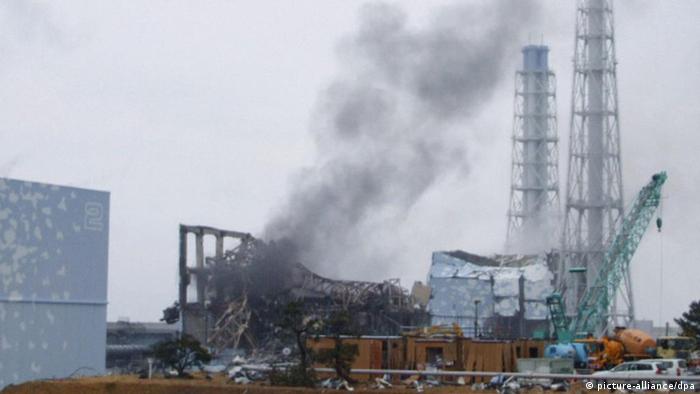
Indeed: there is not one but at least three China syndromes in Fukushima II (Kenichi Omae at Japan Times)


By KENICHI OHMAE
Special to The Japan Times

A year has now passed since the complete core meltdowns of three boiling water reactors at Tokyo Electric Power Co.'s Fukushima No. 1 plant. Because of the limited and biased information issued by the Japanese government, the world does not know what really happened when the earthquake and the tsunami hit the six Fukushima nuclear reactors. There are many important lessons that must be learned to avoid a future disaster. These lessons can be applied to all the nuclear reactors globally. People around the world deserve the right to know what happened.

As a nuclear core designer and someone who earned a Ph.D. from the Massachusetts Institute of Technology in nuclear engineering, I volunteered to look into the situation at Fukushima No. 1 in June of 2011. Mr. Goushi Hosono, minister of nuclear power and environment, personally gave me access to the information and personnel who were directly involved in the containment operations of the postdisaster nuclear plants. After three months of investigation, I analyzed and wrote a long report detailing minute by minute how the nuclear reactors were actually disabled (pr.bbt757.com/eng/)

Here are the highlights of my findings:

1. Three of the six reactors of Fukushima No. 1 had a complete core meltdown a few days after the tsunami hit. The molten fuel penetrated not only through the bottom of the thick pressure vessel, but also poked holes at the bottom of the containment vessel, thus releasing fission materials into the environment. The meltdown itself started at 11p.m. on the day of the tsunami, March 11, 2011.

2. As expected, the meltdown caused the fuel cladding material, zircaloy (zirconium alloy), to react with vapor and to create large quantities of hydrogen and zirconium oxide, which caused the catastrophic hydrogen explosion that blew out three reactor buildings. The hydrogen explosion took place on March 12, 14 and 15. The Japanese Government did not admit to the meltdown until three months later, nor did they admit to the damage to the containment vessels until a half year later. Our government tried to hide this important information for some reason, though judging from the amount of fission material released and from the size of the hydrogen explosion, the meltdown of the entire core was undeniable for anyone who has studied reactor engineering.

3. The earthquake on March 11 damaged all of the five independent external power supply systems, and the 15-meter-high tsunami damaged all of the pumps and motors of the main and emergency cooling systems that were constructed along the shore line, thus disabling the cooling system that pumps in sea water.

4. The tsunami also sent massive amounts of water into the reactor buildings and the turbine housing, thus soaking the emergency diesel engines and batteries, which were stored in the basement of these buildings. This meant that all sources of emergency backup power stored in the basement of the reactors were totally destroyed.

5. There was an air-cooled diesel engine sitting atop a hill close to Reactor No. 6. Its airfins were too big to fit into the basement and was luckily placed outside, and as such, this engine started to generate electricity. With a pump brought in from outside, it started to cool not only Reactor No. 6, but had enough power to cool Reactor No. 5. Of the 13 emergency generators associated with the six plants, this was the only one of the three air-cooled backups, and hence not dependent on water as the heat sink. This air-cooled diesel engine was the only one not entirely submerged in water, but in fact at one point the water level did reach up to half its height. A few weeks later Reactors No. 5 and No. 6 were brought to a cold shutdown.

6. The buildings of reactors No. 1 and No. 3 were blown away by an explosion of hydrogen generated by the core meltdown. Reactor No. 4 eventually exploded, though its core had no fuel inside due to a periodic inspection that meant the fuel rods were stored elsewhere. It turned out that the Reactor No. 4's building filled with hydrogen that leaked from Reactor No. 3 through their common gas release ducts. Reactor No. 2 escaped from the massive explosion, although its core had completely melted. Its windows were blown away most likely by the explosions from neighboring reactors No. 1 and No. 3 and the hydrogen inside Reactor No. 2 escaped into the air.

... full story at Japan Times (found via EneNews). 

Yet another farmer murdered in Honduras

(photo: Cris Thomas)
His name was Doninely "Adonis" López, he was negotiating the legalization of the lands he works along many others in the Bajo Aguán. He went in his motorcycle to work on April 11th when capitalist terrorists shot him six times and got him killed. 

He was 46 years old and makes the 46th person murdered by the death squads in the Bajo Aguán since the military coup of 2009. 

The main promoters of this terrorism of capitalist ideology that does not make to the first pages of newspapers nor is almost mentioned by the TV news are the illegitimate government of the usurper Porfirio Lobo and the mafioso businessmen Miguel Facussé and René Morales, who control the palm oil plantations and want to have the local peasants working for them as slaves and not free.

Source: LINyM[es] (which in this occasion has a lot of background info).

Tuesday, April 17, 2012

1200 Palestinian prisoners begin hunger strike against pre-trial indefinite detention and other abuses by the Apartheid Zionist regime

Another 2300 are also refusing their daily meals (not sure of the difference with a hunger strike), what totals some 3/4 of the Palestinians in Zionist high security prisons fasting beginning today: Prisoners Day, which was also commemorated with massive demos through the oppressed country. 

Some other prisoners have already been fasting for some time already, including several for more than a month (what means probable death or at least severe damage to their organs in case of forced feeding, a degrading torture-like practice).

Source: Al Jazeera.

Teenagers seriously injured by Bahrain police (BCHR)


Bahrain authority escalates its level of excessive force against pro-democracy protesters

16 April 2012

Mohammed Abdul-Aziz, 15, was shot in the chest by security forces who fired at mourners of the martyr Ahmed Ismail on Friday 13th , April 2012. Security forces have widely used shotgun-internationally prohibited weapon- during the last few days in many areas of Bahrain, which resulted in a number of injuries amongst protesters.

The pellets from the shotgun have pierced into different parts of Mohammed's body but mainly his chest which sustained severe injury. His situation is very critical. He was taken to Salmaniya hospital where he received initial treatment. The doctor in Salmaniya recommended that he be transferred to Bahrain Defense hospital where he can be admitted for operation, but security forces refused under the pretext that there are no orders of such. He was later taken to intensive care unit.

Sadeq Reyadh, 15, from Bani Jamra, suffers from skull fracture and internal head bleeding as a result of beating using a weapon by a police man. He was admitted to hospital and is still in a critical condition.

Habib Mohammed Khalil, 15, from Markh, was beaten by security forces and is now admitted to hospital due to a wound in the arm and a severe eye injury.

Security forces carried out a wide house raids campaign than resulted in the arrest of dozens young men (most of them are teenagers between 16-18 years old) from several areas. The raided houses were searched and damaged by security forces, and the detainees were beaten brutally during their arrests, there are still traces of blood in the location where they wear beaten.

Peaceful protests in many areas were attacked by security forces using tear gas, shotguns and sound bombs, leading to cases of suffocation and a number of injuries among the protesters.

BCHR's Said Yousif AlMuhafdhah and Human Rights Watch's Nadim Houry and Tom Malinowsky were arrested in Bahrain and detained for around 4 hours. They were picked up from Duraz and 20 youths were reportedly arrested with them. AlMuhafdhah, Houry and Malinowsky were observing protests when they were detained. When some of the mothers and wives of those detained gathered around the police station to see their loves ones, they were attacked by riot police who shot up to 15 stun grenades at them.

Monday, April 16, 2012

Argentina to nationalize YPF

13 years ago, in one of the last decisions of the catastrophic Menem presidency, Argentina privatized the national oil company YPF, which was bought by its Spanish counterpart Repsol, which had been privatized a decade before under EU pressure. 

However it seems that Repsol YPF has developed in Argentina, as in Mexico, a pure colonialist policy (the so-called Potosí model: take the silver and leave a hole) by which nothing reverted to the country or provinces that provided the oil. It is unclear why exactly the Fernández government has chosen this moment and not, say three or six years ago, but the fact is that the Argentine government is pushing for re-nationalization of the company YPF, which is right now owned at 57% by Repsol (other 25% belongs to Petersen Group, an Argentine conglomerate led by Enrique Eskenazi, that also controls 15% of Repsol). 

The exact process is not clear because President Cristina Fernández (also known as Kirchner, for her husband and predecessor) seems to insist on that it is not a mere reversion to state control, which was back in the day criticized for being partisan and inefficient, and what is emphasized is the Argentine state regaining control over the hydrocarbons under its soil, guaranteeing the oil supply to Argentina itself (in 2011 Argentina had to import gas and oil for the first time in many years) and that the benefits of its production revert to the country (and are not just sent to pay distant stockholders instead).

The rumors of the nationalization caused an irate response by the Spanish government, several of the ultra-conservative ministers losing their temper for the cameras and making threats of international ostracism and what not. 

Argentina also re-nationalized Aerolíneas Argentinas in 2008, preventing that way that it succumbed with the infamous collapse of its Spanish owner, Grupo Marsans in 2010. 

Source: Página12[es].


Update (Apr 17): (source: Gara[es]) The norm that declares YPF subject of public utility and subject to expropriation up to 51% of its equity has already been sent to Parliament for approval.

The Spanish government has made an emergency meeting and announced vague "strong measures". Madrid considers it an aggression against Spanish investors. The big question is: shouldn't they be more worried about the aggression against Spanish workers that they are pushing themselves? Obviously we live in an oligarchic class regime where the interests of the few wealthy ones matter to our rulers and the interests of the vast majority of workers do not at all. 

Zionist forces attack peaceful cyclist march

A peaceful bicycle march was going to take place in Al Auja, near Jericho (Palestine) when a bunch of Zionazi thugs in uniform (IDF recruits) impeded it by means of violence:


That is life in Apartheid Palestine (aka 'Israel') - and these are likely to be beaten a tad less than usual because they are international volunteers - imagine what happens to native Palestinians every other day.

Source: Jews sans frontieres.