Showing posts with label psychology. Show all posts

Sunday, July 13, 2014

Massive peodiphilia scandal shatters British political class

Westminster palace
Insistent rumors happened to be true. At least 40 British politicians, very possibly more, are implicated in recurrent children abuse. Too many and too powerful to be investigated, until now?

The criminal scandal goes back to at least the 1980s but cover-up and missing dossiers delayed the investigation three decades. The criminals belong to all three major political parties: Tory, Labour and Liberals, what underlines that the persistent rumors about pedophile rings being widespread among the power elites, not just politicians, are very much real.

Why would politicians risk their careers for a sexual abuse caprice? A growing suspicion is that children abuse has been a key part of power elites' networking for way too long. The details are obscure but it seems to me that it is the same kind of "sub-clinical psychopath" who is drawn to power-climbing and other forms of bullying, of which child abuse is just one of the most extreme of them. 

Bullies draw their sick emotional satisfaction from inflicting damage to others with impunity (they do fear punishment and that's why they are "sub-clinical"). The most sophisticated of bullies is the Machiavellian, for which power becomes both means for their sick hobby of inflicting pain to others and an end in itself. Not every bully becomes a Machiavellian but every Machiavellian is a bully.

Machiavellians are obsessed with the value of authority (hierarchical obedience) but also with those of purity and ingroup loyalty. However those not belonging to their group (their power network, ethnic or religious group, etc.) are irrelevant for them, unlike what happens with normal healthy people. 

It is interesting that they are obsessed with purity, because what represents purity better than a child? Maybe it is their psychological (and psychopathic) mindset what draws them to pedophilia in such large numbers?

Saturday, April 12, 2014

Sense of justice is not emotional but fully driven by reason

This may be highly counter-intuitive because we culturally associate this sense of justice with idealism or, as Che Guevara put it, with being driven by superior feelings of love for fellow humans.

Actually it has nothing to do with it but with greater rational function, brain scans show.

Keith J. Yoder & Jean Decety, The Good, the Bad, and the Just: Justice Sensitivity Predicts Neural Response during Moral Evaluation of Actions Performed by Others. Journal of Neuroscience 2014. Pay per viewLINK [doi:10.1523/JNEUROSCI.4648-13.2014]

A copy of the study has been uploaded by co-author J. Decety to academia.edu.

Complementary source: press release.

From the latter:
During the behavior-evaluation exercise, people with high justice sensitivity showed more activity than average participants in parts of the brain associated with higher-order cognition. Brain areas commonly linked with emotional processing were not affected.

The conclusion was clear, Decety said: “Individuals who are sensitive to justice and fairness do not seem to be emotionally driven. Rather, they are cognitively driven.”
According to Decety, one implication is that the search for justice and the moral missions of human rights organizations and others do not come primarily from sentimental motivations, as they are often portrayed. Instead, that drive may have more to do with sophisticated analysis and mental calculation.

This may explain why there is a well known positive correlation between intelligence and leftism: fairness is simply more rational.

Saturday, December 21, 2013

Machiavellism, social dominance orientation and authoritarianism are tightly related (and subclinically psycopathic)

Depending on one's ideology this may seem either obvious or counterintuitive but that is what a powerful set of five successive studies has found.
Laura Niemi & Liane Young, Caring across Boundaries versus Keeping Boundaries Intact: Links between Moral Values and Interpersonal Orientations. PLoS ONE 2013. Open accessLINK [doi:10.1371/journal.pone.0081605]
Abstract

Prior work has established robust diversity in the extent to which different moral values are endorsed. Some people focus on values related to caring and fairness, whereas others assign additional moral weight to ingroup loyalty, respect for authority and established hierarchies, and purity concerns. Five studies explore associations between endorsement of distinct moral values and a suite of interpersonal orientations: Machiavellianism, prosocial resource distribution, Social Dominance Orientation, and reported likelihood of helping and not helping kin and close friends versus acquaintances and neighbors. We found that Machiavellianism (Studies 1, 3, 4, 5) (e.g., amorality, controlling and status-seeking behaviors) and Social Dominance Orientation (Study 4) were negatively associated with caring values, and positively associated with valuation of authority. Those higher in caring values were more likely to choose prosocial resource distributions (Studies 2, 3, 4) and to report reduced likelihood of failing to help kin/close friends or acquaintances (Study 4). Finally, greater likelihood of helping acquaintances was positively associated with all moral values tested except authority values (Study 4). The current work offers a novel approach to characterizing moral values and reveals a striking divergence between two kinds of moral values in particular: caring values and authority values. Caring values were positively linked with prosociality and negatively associated with Machiavellianism, whereas authority values were positively associated with Machiavellianism and Social Dominance Orientation.
A synthesis of the results of the five studies is presented in figure 2:
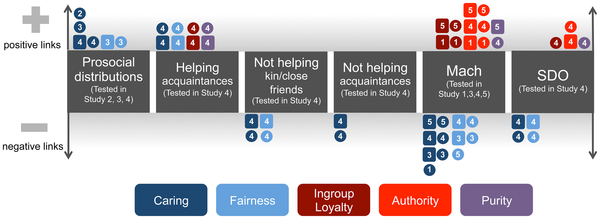
Figure 2. Summary of correlations observed across all studies.
Each square represents an observation of a significant partial correlation (politics, religion, and gender controlled). Each circle represents an observation of a significant zero-order correlation. Study (#) indicated on each circle/square. Moral values are color-coded.
"Mach" means Machiavellianism and "SDO" means social dominance orientation, which are clearly and positively correlated among them, via the same set of "group values" (ingroup loyalty, authority and purity). Instead helping those close to oneself and prosocial distribution are very positively correlated among them and associated with the "humanist values" or caring and fairness.
This is very much counterintuitive, especially as the authors use the term "individualizing" for the caring and fairness values, which makes absolutely no sense to me, as individualism means selfishness and aloofness, even misanthropy. Hence I replaced that term for "humanist" although I also pondered "personalist" (as the person can be something more whole and socially connected than the individual).
The produce of the two sets of values is even more at odds with the concept individualism. In fact it is the group (or "binding and dividing") value people who actually strive for social dominance and favor Machiavellianism. This is because they do not think in the group as extensive but as intensive and almost certainly as tool for their own individualist selfish goals. 
Interestingly:
Most interpersonal behavior requires individuals to balance selfish motivation with prosocial motivation – to be a positive social partner who helps other people. These orientations are not mutually exclusive – care for the self is at times necessary to enable care for others. However, for some individuals, a motivation to dominate or exploit the group for selfish aims, measureable as Machiavellianism [20] or Social Dominance Orientation [21], may take precedence. Individuals high in Machiavellianism (“Machs”) admit to employing manipulation and deception to achieve power, status, control, and financial success [20]. These goals require successful management of group relations, which may in turn shed light on the paradoxical nature of Machiavellianism. Machs are often described as socially skilled, well-liked, popular, and excellent at building alliances [22], but they are also subclinically psychopathic [23] and exploitative of others' trust [24], [25]. Machiavellian negotiation of relationships and social structures for personal gain may benefit from a moral stance that elevates values like loyalty and deference to authority. More specifically, these values are critical for the preservation of existing social order but largely insensitive to concerns about caring and fairness. Moralization of these values – alongside relative indifference to caring and fairness values – could facilitate strategic hierarchy management while freeing the individual to feel morally justified in engaging in manipulative or exploitative behavior.
Subclinically psychopathic is a most revealing concept. I have often though of this as a real social problem of first order. The subclinicality may only be because psychiatry has established a boundary not to touch the powerful, what would be playing with fire. But, as we will see below, there is more to it.
What happens with social dominance orientation?
Relatedly, Social Dominance Orientation (SDO) is characterized by a desire for inequality and a tendency to categorize people along a hierarchical “superior-inferior dimension” [21]. SDO, like Machiavellianism, has been found to predict various antisocial outcomes, including explicit racism and sexism as well as reduced empathy and concern for others [21], [26], [27]. While SDO has previously been identified as negatively correlated with individualizing values and positively correlated with binding values [2], SDO has not yet received attention for its potential positive connection with binding values when political orientation is controlled. Since an orientation towards social dominance requires a strict hierarchical worldview, a positive correlation between SDO and authority values, regardless of political orientation, would be predicted [2].
Later in the discussion they turn back to "Machs":
What could account for the positive relationship between respect for authority and Machiavellianism, an antisocial interpersonal style associated with strategic manipulation? Indeed, Machs have been shown to lie more convincingly [35], steal more readily [36], and rationalize deeds with callous unemotionality [37]. To provide the foundation for two potential explanations for this surprising relationship, we first describe two relevant aspects of Machiavellianism: (1) Machiavellianism and psychopathy are distinct in relation to social norm processing, and (2) Machs are likely to be dominant individuals in positions of authority. Next, we propose two potential explanations for the positive relationships between moral valuation of respect for authority and Machiavellianism: (1) Machiavellianism may entail moralization of respect for authority for a variety of strategic reasons, and (2) authority values may license Machiavellian behavior.
Discussing the subtle differences between Machiavellianism and outright psychopathy:
Although Machiavellianism is characterized by selfishness and shares some overlap with psychopathy [23], Machs are not necessarily aloof and unconcerned with social norms. Instead, the ability to manipulate others may actually benefit from a keen sensitivity to norms that govern social structure.
Instead most clinical psychopaths tend to be aloof. 
Another key difference is that Machs are highly sensitive to punishment, while again true psychopaths may be somewhat indifferent to this social corrector, so Machs retreat and even give away profusely in order to avoid this outcome.
Machiavellianism is also clearly related to dominance and control and, therefore to respect for authority:
In addition to being hyper-attuned to social structure, Machs are also likely to reside at the top of those structures in positions of authority. Machiavellian-style social climbing tactics (e.g., manipulation and deception) are more likely to be used by individuals high in dominance and well-equipped to assume authority over others [38]. Likewise, Machiavellian supervisors in a range of business sectors have been described by subordinates as employing authoritarian work habits involving strict control over a hierarchical workplace structure [46]. As individuals who recognize they can personally benefit from “working the system” from a position of authority – rather than attempting to make the system work for all – Machs may be more likely to identify respect for authority as relevant or even central to their concepts of “right and wrong”.
Ironically Machiavellianism finds in authoritarianism a self-serving morality. Being able to play the game and climb to the top, Machs clearly benefit from such respect to authority themselves and will spread the word among their subordinates. It also helps themselves to self-regulate their behavior in ways that are within the boundaries of the game, yet still selfish. Accepting others' authority acts as self-protection and gives them a moral varnish, internalizing these values allows them more easily to perform their flattery and igratiation climbing tactics (otherwise probably perceived as humiliation).
The authoritarian ethics seem also useful in order to condone otherwise anti-social behaviors such as cheating, graft or torture. Other recent studies have shown that individuals primed to feel high in power – that is, closer to “authority figure” status – were more likely to endorse unethical and antisocial behavior [55], [56].
Something I really miss in this study is the proportion of tendencies among the studied group, which could reflect general distribution in society. While the statistical correlations are systematically produced the proportion and intensity of the values of the actual human sample is not shown.
The authors assume that the prosocial values are generally desirable but in reality what I have found way too often is that many people, especially those in intermediate command positions or with a career to develop, experience serious contradictions between the "official" prosocial or humanist ethics and the "unofficial" but very real Machiavellian one. I would even say that they often feel emotionally broken by this contradiction. And this "they" at least sometimes becomes "we" and "I", so painfully.
It would certainly be interesting to study this contradictory social and psychological reality, even cross-culturally. 
In any case this study does produce some very interesting data that should be most valuable for future and more comprehensive research. It also produces very important information for our meditations on our social and personal reality, and certainly it also applies to past realities, at least since society became complex and hierarchical.

Monday, May 14, 2012

Romney was a bully - and a bully is always a bully

Bullying is one of the worst social dynamics that can happen in school (or otherwise among kids, among adults such behaviors are often camouflaged or repressed, not that they do not exist) and there's nothing worse than a bully, really (well maybe all the kids who instead of kicking his face laughed at his institutional violence). 

Bullies, as we know, are actively recruited to become policemen or otherwise thugs for the wealthy. But they begin their training as kids. Bullies suck!

Worst of bullies is that they do not really feel like you or me: they are sadics. 

And now it has been known that Mitt Romney, the Mormon fundamentalist conservative candidate for Emperor (US President) was a bully in school. According to Al Jazeera, the thug insulted allegedly homosexual classmates, attacked a blind teacher among psychotic laughs and, in the most striking case of his stupidity and insensibility, he, along with some other thugs companions, pinned down a classmate and cut his hair with a pair of scissors. 

I doubt someone like this can be considered a normal person, certainly not someone to be given any authority. Against what actually happens, policemen and security guards should be also screened for this kind of psychological behaviors because you don't want a bunch of psychopaths with so much power, but certainly you don't want them to be ministers or presidents or CEOs of anything. 

There should be psychological screening against psychopaths getting too much power. There are not so many systematic bullies in each class, it should be not so difficult to get them to do some less dangerous job like sweeping the streets or whatever. They should never be given any power, never!

Wednesday, February 29, 2012

The rich are rich because they are greedy and cheat

There's a new study out there set to open some minds to reality:

Raul K. Piff et al., Higher social class predicts increased unethical behavior. PNAS 2012. Pay per view (free in six months or already depending on global region).

Abstract

Seven studies using experimental and naturalistic methods reveal that upper-class individuals behave more unethically than lower-class individuals. In studies 1 and 2, upper-class individuals were more likely to break the law while driving, relative to lower-class individuals. In follow-up laboratory studies, upper-class individuals were more likely to exhibit unethical decision-making tendencies (study 3), take valued goods from others (study 4), lie in a negotiation (study 5), cheat to increase their chances of winning a prize (study 6), and endorse unethical behavior at work (study 7) than were lower-class individuals. Mediator and moderator data demonstrated that upper-class individuals’ unethical tendencies are accounted for, in part, by their more favorable attitudes toward greed.

They even justify their unethical behavior because for them greed is somehow ethical, something good (as Reagan would memorably state in his reign), justifying almost everything (while for the rest of us it is obviously not). 

I wonder if there is a greedy gene and if we could inactivate it with genetic engineering. Of course I also wonder if such thing could be ethical... but sounds better than guillotine, right?

In the media: The Independent, Kaos[es].

Other great discoveries of modern psychological science: conservatives are quite scared, and progressive and open minded people are generally smarter.

Tuesday, September 13, 2011

Echoes from the Class War (Sep 13)

Greece: street clashes continue against the neocolonial imposition of brutal austerity (for the poor, not for the rich) ··> videos at PO: video 1, video 2 (Thessaloníki).

Germany: demonstration for Freedom not Fear, against government surveillance and control of the citizenry ··> video at PO

USA: Fort Calhoun Nuclear Power Plant (Iowa) suffered a fire in July, apparently not related to the floods ··> EneNews.

Chile: Fascist attack, with police support, against Communist Party main see in Santiago leaves four injured ··> Disidente del Capitalismo[es].

Banners of the Communist Youth of Chile

Australia: teachers demonstrated in Sydney against government reactionary labor reforms ··> video at PO.

Science:
  • Birth control pill affects memory: women on the pill remember better the emotional aspects, while those not using it remember better the material details ··> SD.
  • 50 new exoplanets discovered in a row, 16 of them 'super-Earths' ··> BBC.
  • New evidence for a preferred direction of Spacetime challenges the Cosmological Principle (viewed on a sufficiently large scale, the properties of the Universe are the same for all observers) ··> PhysOrg.

Wednesday, June 22, 2011

The Psychiatric narco-scam

A most interesting literary review brings to the forefront a key issue of modern medicine, specifically of that dangerous pseudoscience that is Psychiatry:

Marcia Angell, The Illusions of Psychiatry at the New York Review of Books.

Angell discusses the 'American Psychiatric Association’s Diagnostic and Statistical Manual of Mental Disorders' (DSM)—often referred to as the bible of psychiatry. She also considers 'Unhinged', the recent book by Daniel Carlat, a psychiatrist, who provides a disillusioned insider’s view of the psychiatric profession.

Other two relevant books are also mentioned in the article: Irvin Kirsch's The Emperor’s New Drugs: Exploding the Antidepressant Myth and Robert Whitaker's Anatomy of an Epidemic: Magic Bullets, Psychiatric Drugs, and the Astonishing Rise of Mental Illness in America

...with the introduction of psychoactive drugs in the 1950s, and sharply accelerating in the 1980s, the focus shifted to the brain. Psychiatrists began to refer to themselves as psychopharmacologists, and they had less and less interest in exploring the life stories of their patients. Their main concern was to eliminate or reduce symptoms by treating sufferers with drugs that would alter brain function. 

Since the 1970s... by emphasizing drug treatment, psychiatry became the darling of the pharmaceutical industry, which soon made its gratitude tangible.

Psychiatrists trying to improve their income and Big Pharma doing the same... what a explosive mixture! And it may explode right in your brain.

Interestingly enough, the DSM is truly a revealed book, it seems:
Not only did the DSM become the bible of psychiatry, but like the real Bible, it depended a lot on something akin to revelation. There are no citations of scientific studies to support its decisions.
The second page begins with Carlat's disillusioned confessions:
"Such is modern psychopharmacology. Guided purely by symptoms, we try different drugs, with no real conception of what we are trying to fix, or of how the drugs are working. I am perpetually astonished that we are so effective for so many patients". 
While Carlat believes that psychoactive drugs are sometimes effective, his evidence is anecdotal.
But while this greedy speculative nonsense and lack of scientific methodology should be most worrying when it applies to adults, it is even worse when it comes to children, who, specially in the USA, have become the main victims of this pharmaceutical plot:
What should be of greatest concern for Americans is the astonishing rise in the diagnosis and treatment of mental illness in children, sometimes as young as two years old. These children are often treated with drugs that were never approved by the FDA for use in this age group and have serious side effects. The apparent prevalence of “juvenile bipolar disorder” jumped forty-fold between 1993 and 2004, and that of “autism” increased from one in five hundred children to one in ninety over the same decade. Ten percent of ten-year-old boys now take daily stimulants for ADHD—”attention deficit/hyperactivity disorder”—and 500,000 children take antipsychotic drugs.

In most cases these mistreatments of very young children causes long-term problems (for example obesity, just an example) but in the worst cases they can even kill:

In December 2006 a four-year-old child named Rebecca Riley died in a small town near Boston from a combination of Clonidine and Depakote, which she had been prescribed, along with Seroquel, to treat “ADHD” and “bipolar disorder”—diagnoses she received when she was two years old. Clonidine was approved by the FDA for treating high blood pressure. Depakote was approved for treating epilepsy and acute mania in bipolar disorder. Seroquel was approved for treating schizophrenia and acute mania. None of the three was approved to treat ADHD or for long-term use in bipolar disorder, and none was approved for children Rebecca’s age.
Beware!

Thursday, May 26, 2011

California may outlaw circumcision of minors

I would vote this if I could: I find circumcision a very nasty way of harming young boys, a barbaric practice akin to female castration (at least in its milder forms) and a blasphemy against God (if God exists: Nature is its expression, so crippling nature is a blasphemy, a capital sin). 

I also find that it decreases the quality of US-made porn (a peeled penis is ugly or at very strange-looking and puts you down). For some reason in parts of the USA it has become common to quasi-castrate boys at birth, even without asking the parents. It seems that the main reason was originally to prevent masturbation. Some figures put the rate of genital violence (circumcision) against newborns at US hospitals around 80%.

There are no particular advantages for this practice. Even if it might slightly help preventing sexual disease transmission, the effect is tiny and cannot justify the damage. The only "advantage" therefore seems to be pseudo-moral: preventively repressing the normal sexuality of young men. 

It is therefore a form of castration, much like female circumcision is. Hence it must be eradicated and no superstition must be allowed to stay in between.

In this sense the California provision is clear in not mentioning any exception, being them religious or otherwise. Otherwise it'd be like justifying cannibalism or slavery on religious grounds.

Source: Miller McCune.

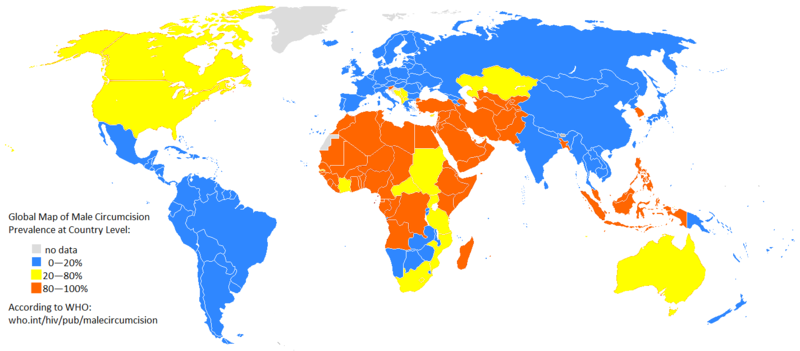
Commonality of male circumcision through the World

Saturday, January 22, 2011

Meditation changes the brain

A new study has confirmed that meditation, reported to increase awareness and calmness, actually does alter the brain. 

Participants in an 8 week meditation program practiced some 30 minutes of the exercises (similar to yoga) every day. As result their brains showed increase of grey matter in the hippocampus (learning and memory) and decrease of grey matter in the amygdala (fear and stress). No change was detected in the insula (self-awareness), reported to have changed in previous studies. The authors suspect that longer practice is needed for this last.

No such changes were detected in the control group, showing that the plastic changes in the brain were caused by the meditation exercises. 

Full story at Science Daily.

Ref. (pay per view): Britta K. Hölzel, James Carmody, Mark Vangel, Christina Congleton, Sita M. Yerramsetti, Tim Gard, Sara W. Lazar. Mindfulness practice leads to increases in regional brain gray matter density. Psychiatry Research: Neuroimaging, 2011; 191 (1): 36 DOI: 10.1016/j.pscychresns.2010.08.006

Thursday, December 30, 2010

Conservative brains are full of fear

Fans of the classical (but probably incorrect) blank slate hypothesis of the human brain won't like this: new research (not yet published at a peer review journal, will be in the near future) has found that conservative people have a larger amygdala, a primitive almond-shaped part of the brain responsible for fear and anxiety.

It is unclear if this physical/neurological trait is caused by the ideology, which is clearly based on fear of any change and attachment to some learned values, or if, inversely, it is the biological trait which causes conservative ideology. Different research, earlier this year found that people with more liberal ideology tend to share a variant of the DRD4 gene, which may be a cause of openness to novel ideas (which in turn may increase adaptability, as hyper-specialists invariably go extinct in the long term).

Source: Salon

Also, in regard to the role played by the amygdala in fear, you may be interested in this story (another scientific research) about a woman whose amygdalas were destroyed by a disease and who feels no fear whatsoever (what also has its downsides: fear is a natural emotion or instinct that plays a clear role in survival).

Additionally, Razib mentions today that conservatives (in the USA) tend to be fatter than average. Maybe they have to compensate for their quasi-permanent state of panic by giving themselves continuous treats?


Update (Jan 13): Amygdala stores "Pavlovian fear conditioning"  according to the latest PLoS ONE paper on the matter by H.G. Bergstrom and colleagues.

Thursday, November 18, 2010

Alexander Shulgin, 85, hospitalized with a stroke. Donations and volunteers asked to preserve his work

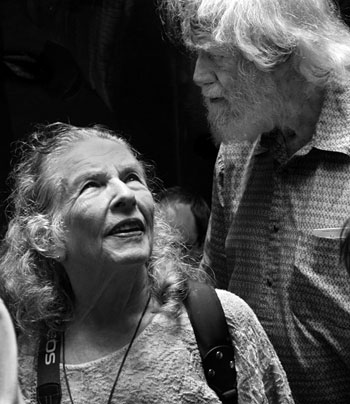
Ann and Alexander Shulgin
I just learned via Psychedelic Research that one of the greatest researchers in psychoactive drugs, Alexander Shulgin, 85, has been hospitalized with a stroke. He was surgically intervened two years ago to replace a defective aortic valve and, given his age, he may leave us at any moment. 

Shulgin, a Ph. D. Biochemist, has made extensive research in synthesis drugs such the widely known ecstasy, which he intended to use for the treatment of depression and other psychological disorders.

In 1994 he saw his laboratory raided by the DEA after he published PHiKAL, a chemical love story

The drug knowledge vault, Erowid, is now asking for volunteers (for transcriptions and image enhancement) and donations in order to help preserve his legacy. You can donate here (either to Erowid or directly to the Shulgins) and you can volunteer your services here.