Wednesday, July 15, 2015

Majority of Syriza's Central Committee rejects Tsipras' surrender

109 of the 201 members of the Central Committee have signed a document rejecting Tsipras' terms of surrender, which has been labeled as "unbearable", "humiliating", "catastrophic" and even as a "coup". 

This will probably not have decisive weight on today's vote but it effectively underlines how much Tsipras, and Dragasakis' right wing that supports him, is isolated within the party and how the challenge that yesterday placed Kouvelakis (Left Platform) about reclaiming the party by the Left may well succeed. 

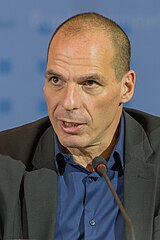
Among the dissidents is Tasos Koronakis, Secretary General of the Political Committee. The list of prominent dissidents has been growing also with Finance Secretary Nadia Valavani, who resigned as member of the government. Former Finance Minister Yanis Varoufakis, who is not member of the party, has also been fiercely critical of the agreement and said that it will not materialize because of IMF opposition (it is true that the IMF has in extremis attacked the deal, demanding a haircut - Washington seems very worried about European stability). It is also apparent that current Finance Minister Euklid Tsakalotos opposes the deal as well.

Stathis Kouvelakis explains Syriza's drift and unavoidable break-up

S. Kouvelakis (source)
In an absolutely must-read interview at Jacobin magazine, Stathis Kouvelakis (Left Platform of Syriza) explains from an insider viewpoint the how Syriza became trampled in its own naivety, the key role played by Yannis Dragasakis (vice-prime minister), the turning point of the referendum and the intention by the Left Platform to reclaim the party in a situation that is one of absolute breakup. 

The interview is way too long to be pasted here in full but I will quote some key passages re-sorted according to my best criterion:


The referendum

... the Left Platform’s leader and minister of energy and productive reconstruction, Panagiotis Lafazanis said that the referendum was the right decision, albeit one that came too late, but he also warned that this amounted to a declaration of war, that the other side would cut off the liquidity and we should expect within days to have the banks closed. Most of those present just laughed at this suggestion.

... what is absolutely clear is that [the referendum] unleashed forces that went far beyond those intentions. Tsipras and the government were clearly overtaken by the momentum that was created by the referendum.

... it is a complete illusion to pretend that the referendum didn’t happen. It did happen, and it’s clear to both international public opinion and Greek society that Tsipras is betraying a popular mandate.


Revelations from the referendum: class, youth and nation

Even relatively mainstream commentators recognized that this was the most class-divided election in Greek history. In working-class districts you had 70 percent and above for “no,” in upper-class districts you had 70 percent and above for “yes.”

This is the first moment since the crisis that the youth in its mass actually made a unified statement. Eighty-five percent of those from eighteen to twenty-four voted “no,” which shows that this generation, which has been completely sacrificed by the memorandum, is very aware of the future ahead of it and has a clear attitude with regards to Europe.

... the third dimension is certainly that of national pride. This explains why outside the big urban centers, where the class lines are more blurred, in the Greece of the countryside and small cities, even there the “no” vote won a majority.


The post-referendum suicide

At that meeting [with all the bourgeois pro-Troika opposition parties, freshly defeated in every single province] you saw an extraordinary thing happen: the head of the victorious camp accepted the conditions of the defeated camp. This, it has to be said, is something that’s unique in political history. I don’t we’ve ever seen this before.

... the government immediately took those initiatives to deactivate the dynamic that was emerging with the referendum. And this is why hours after the announcement of the final resort, this meeting of all the political leaders was called, which fixed somehow an agenda entirely different from that expressed by the “no” vote.

The content of this new agenda was that whatever happens — that was of course already there in moves inspired by Dragasakis made the week before — Greece had to stay in the eurozone. And the most emphatic point of the joint statement signed by all the political leaders — with the exception of the Greek Communist Party (KKE), who refused to sign, and the Nazis, who were not invited to the meeting — was that this referendum was not a mandate for a break but a mandate for a better negotiation. So from that moment onwards the mess had been set.


Varoufakis plan B and Dragasakis' veto

... Varoufakis says that a small team of people around him worked during the week leading to the referendum on an alternative plan including state control of the banks, issuing of IOUs and disconnection of the Greek central bank from the Frankfurt ECB, so on a sort of gradual exit. But that clearly came too late and was rejected by nearly all the rest of the economic team of the cabinet, by which he essentially means Dragasakis. And Tsipras, of course, validated that decision.


Tsipras' poser strategy

[Tsipras] thought that by appearing as a loyal “European,” deprived of any “hidden agenda,” he would get some kind of reward. On the other side, he showed for some months a capacity to resist to the escalating pressure and made some unpredictable moves such as the referendum or travelling to Moscow.

He thought this was the right mix to approach the issue, and what happens is that when you consistently follow this line you are led to a position in which you are left only with bad choices.


Behind Tsipras: Dragasakis

... we have to distinguish two elements within the government. The first is the rightist wing of the government led by two of the main economists, essentially Dragasakis but also Giorgos Stathakis. And then the core leadership, Tsipras and the people around him.

The first group had a consistent line from the outset — there was absolutely no naïveté on their part. They knew very well that the Europeans would never accept a break with the memorandum.

This is why Dragasakis from the outset did everything he could not to change the logic of the overall approach. He clearly sabotaged all the attempts for Syriza to have a proper economic program, even one within the framework that had been approved by the majority of the party. He thought that the only thing you could get was an improved version of the memorandum framework. He wanted his hands completely free to negotiate the deal with the Europeans, without himself appearing too much at the stage, he succeeded in controlling the negotiation team, especially once Varoufakis had been sidelined.

(...)

... [blocking any 'Grexit' style option] was the obsession more particularly of Giannis Dragasakis — he made it impossible to make any moves towards public control of the banks. He is the man of trust actually of the bankers and sectors of big business in Greece and has made sure that the core of the system would remain unchanged since Syriza took power.

(...)

And then you have the other approach, that of Tsipras, which was indeed rooted in the ideology of left-Europeanism. I think the best illustration of that is Euclid Tsakalotos, a person who considers himself a staunch Marxist, someone who comes from the Eurocommunist tradition, we were in the same organization for years.

(...)

What we also clearly saw in that period is that the government, the leadership, became totally autonomous of the party. That process had already started (...) but now it has reached a kind of climactic level.


And the academics:

Tsakalotos said he was very disappointed by the low level of the discussion [in the European institutions]. In the interview to the New Statesman, Varoufakis says very similar things about his own experience, although his style is clearly more confrontational than Tsakalotos’s.

From this it is quite clear that these people were expecting the confrontation with the EU to happen along the lines of an academic conference when you go with a nice paper and you expect a kind of nice counter-paper to be presented.

I think this is telling about what the Left is about today. The Left is filled with lots of people who are well-meaning, but who are totally impotent on the field of real politics. But it’s also telling about the kind of mental devastation wrought by the almost religious belief in Europeanism. This meant that, until the very end, those people believed that they could get something from the troika, they thought that between “partners” they would find some sort of compromise, that they shared some core values like respect for the democratic mandate, or the possibility of a rational discussion based on economic arguments.

The whole approach of Varoufakis’s more confrontational stance amounted actually to the same thing, but wrapped in the language of game theory. What he was saying was that we have to play the game until the very, very, very end and then they would retreat, because supposedly the damage that they would endure had they not retreated was too great for them to accept.

But what actually happened was akin to a fight between two people, where one person risks the pain and damage of losing a toe and the other their two legs. 


Death trap

... this whole negotiation process by itself triggered passivity and anxiety among the people and the most combative sectors of society, leading them to exhaustion. Before the referendum the mood was clearly, “We can’t stand this kind of waterboarding process anymore, at some point it has to end.”

This is something personally I hadn’t foreseen. I thought the pace would be quicker. I hadn’t foreseen that this process of being increasingly trapped in this absolute deadlock lasting for so long, limiting enormously our own room for initiative.


Today's vote

... all the MPs of the Left Platform will reject the new memorandum in the next vote, this has already been announced.

The most symbolic and crucial vote will happen now. Last week’s vote was a vote on the proposals for the negotiation. The next vote, which will determine the future of Syriza and the country, will be the vote on the agreement signed on Sunday. And I think the information I have so far is that the vote will be absolutely clear, and in the popular memory will be the real parallel with the famous May 2010 and February 2012 votes, when everybody was looking at each individual, each individual MP, to see how they would vote in this occasion.


Syriza is breaking up

At this stage, what I can say is that the decision of the Left Platform is to reclaim the party and demand a party congress. I think it’s quite clear that this U-turn of Syriza has only minority support within the party.

Of course, we all know that bureaucratic manipulations of party procedures are endless and display infinite capacity to innovate. However, it is very hard for me to see how the majority of Syriza members could approve of what has been done. Essentially the leadership will ferociously resist the call for a congress. We’ll see what happens, because the statutes allow us to call for a central committee meeting and so on.

But objectively, the process leading to the disintegration of Syriza has already started. Syriza as we knew it is over and splits are absolutely inevitable. The only issue now is how they will happen and what form they will take.

(...)

There are all kinds of initiatives from beyond the ranks of Left Platform to react to what is happening. Already we know that the tendency of the so-called Fifty-Three (the left wing of the majority) has disintegrated, and there will be major realignments on that side. The key thing is for us to act as the legitimate representation of the No camp, the anti-austerity camp, which is the majority in Greek society and which has been objectively betrayed by what is happening.


Some lessons learned

A comrade sent me a message saying it is true the Syriza government has succeeded in making the EU much more hated by the Greek people than anything Antarsya or KKE has been able to accomplish in twenty years of anti-EU rhetoric in that field!

(...)

Obviously the strategy of the “good euro” and “left-Europeanism” collapsed, and many people realize that now. The process of the referendum made that very clear, and the test went up to its extreme limits. This was a tough lesson, but a necessary one.


Self-criticism

Clearly, the Left Platform could have done more in that period in terms of putting forward alternative proposals. The mistake is even clear because the alternative document itself was there, there was just internal hesitation about the appropriate moment to release it.

We had been neutralized and overtaken by the endless sequence of negotiations and dramatic moments and so on, and it was only when it was already too late, in that plenary meeting of the parliamentary group, that a reduced version of that proposal was finally made public and started circulating. This is clearly something we should have done before.

(...)

We could say, in hindsight, that some sections of the Greek left that were less tied to party politics could have taken a Podemos type of initiative, or perhaps more realistically, a Catalan CUP-type of initiative with sectors perhaps of the far left but of the more movementist tenor.

But, once again, there were no such sectors ready to do that. Everyone was much too linked to the limitations of the existing structures, and the only attempt to redistribute the cards failed to materialize, in this case because the weight of traditional ultra-leftism proved too strong.


But what else?

What was the other option? Having passed the test of that decisive period, both KKE and Antarsya have proved, in very different ways of course, how irrelevant they are. For us, the only alternative choice would have been to break with the Syriza leadership sooner. However, given the dynamic of the situation after this crucial bifurcation of the late 2011 to early 2012 moment, that would have immediately marginalized us.

The only concrete result I can see would be to add a couple more groups to the already ten or twelve groups constituting Antarsya, and Antarsya instead of having 0.7% being at 1%. That would mean Syriza would have been offered entirely on a platter to Tsipras and the majority, or at least to those forces outside the Left Platform.

Tuesday, July 14, 2015

Alexis Tsipras: the walking dead

Zoì Konstantinopoulou may delay the vote
The situation is still evolving, so I only have a fragmentary grasp but it is already very apparent that Tsipras' humiliating surrender to Schüble's terms will break Syriza in two and is also causing major social upheaval in the Greek streets. 

The voting, initially scheduled for tomorrow, may not be held at all in due time (what in itself violates the terms of the agreement) because the President of the Parliament, Zoì Konstantinopoulou, who has declared that she cannot and will not back the deal, may delay the vote. She is the one with such power and neither Tsipras nor Schäuble ever considered consulting her. 

The list of dissidents inside Syriza's bench is growing by the moment. Twitter's rumorology talks about at least 47 MPs from this party that have already declared that they will vote against. The list may include both of Tsipras finance ministers: Yanis Varoufakis (former) and Euklid Tsakalotos (current), as well as several other ministers. So it is legitimate to wonder about how much support, if any at all, Tsipras still has in Syriza and even if the deal will be approved at all. 

The pro-German opposition has 106 seats, so, if the deal is put to vote at all, Tsipras needs to rally at least 45 of the 149 Syriza MPs for a yes vote to succeed (assuming no abstentions or absences - the coalition partner ANEL has already said they will vote "no"). This is possible, I guess, but still Tsipras and his supporters have become political walking dead and the unity of the party is forfeit. 

This is what I could gather about the Members of Parliament. The split between Tsipras and whoever still follows him and the grassrots of the party seems much much greater. The communiqué of the youth branch is very significant, calling the people to rally in the streets against the "putsch". Several regional branches of the party have already announced they will ask their MPs to vote "no".

The labor unions are not behind, the public sector unions have called a national strike tomorrow. Additionally, protests at Syntagma Square and other places are thriving and the iconic burning of a Syriza banner is symptomatic of the widespread discontent. 

Monday, July 13, 2015

Total surrender, betrayal: Tsipras signs worse conditions than what Greeks voted against

He didn't even got a restructuring of the debt, go figure! No wonder he had that deeply sad face.

The only "achievement" is more money to indebt the Greek People even further while they keep paying the ever-growing debt to the International Bankster Mafia.

He gets a "promise" of considering a restructuring of the debt in Autumn but who believes that when the Troika has been all the time pulling back from its own proposals.  


Plunder!

Tsipras yielded in something fundamental: a 50 billion euro privatization of Greek assets (energy, communications, transport, etc.), that is: further looting of Greece by the Euro-leeches. Until now privatization had "only" implicated 4 billion euros, so this is a massive escalation of the looting. Unbelievable!

Other surrender conditions signed by Tsipras are:
  • Pension freezing and retirement age at 67
  • Revision of worker rights (collective agreements, right of strike, etc.)
  • Measures to guarantee the payment of loans
  • Yet another administrative reform (there was already one under Samaras)


New elections

Considering what happened on Friday's vote, I think that it is unavoidable that Syriza breaks up in two in no time and that the Right Wing (led by Tsipras) becomes a new PASOK or DIMAR, that will be punished by the Greek People as soon as they have the right to vote. 

Minister of Work, Panos Skourletis, declared that the conditions of the agreement are not viable and predicted early elections later this year. However he also demanded the resignation of the MPs who "vetoed" (sic) the Friday proposal. It is unclear to me how a bunch of dissident MPs could "veto" anything versus the pro-Troika coalition rallied by Tsipras. It seems just playing the blame game. 

In any case it seems that Tsipras won't be able to retain a technical majority government, with bourgeois parties like To Potami rejecting any possibility of joining the Tsipras coalition. He therefore becomes hostage of the bourgeois pro-Bankster opposition. 

However this bourgeois opposition has nearly no hope of winning elections. The latest opinion polls (from June 15th) gave Syriza 48% of the voter support (not including undecided), while New Democracy collapsed to less than 20% and the other parties remained stuck.

(source: Electograph)

So the matter is: (1) how exactly will Syzira split (it will) after this horrible surrender and (2) which of the two factions will be supported by Greek voters, particularly that 36% who backed Syriza in January and made up the core of those who voted "oxi" in last week's referendum.


Sources: Público[es] (link 1, link 2).


Further related reading:

Greek Left Review: Exclusive: Yanis Varoufakis opens up about his five month battle to save Greece.

This country must stop extending and pretending, we must stop taking on new loans pretending that we’ve solved the problem, when we haven’t; when we have made our debt even less sustainable on condition of further austerity that even further shrinks the economy; and shifts the burden further onto the have-nots, creating a humanitarian crisis.

It’s not that it didn’t go down well – there was point blank refusal to engage in economic arguments. Point blank. You put forward an argument that you’ve really worked on, to make sure it’s logically coherent, and you’re just faced with blank stares. It is as if you haven’t spoken. What you say is independent of what they say. You might as well have sung the Swedish national anthem – you’d have got the same reply.


Twitter: #ThisIsACoup


Sunday, July 12, 2015

Varoufakis states the obvious: it's not a negotiation but outright bullying

He puts it in somewhat more polite terms but the final conclusion is the same:

Based on months of negotiation, my conviction is that the German finance minister wants Greece to be pushed out of the single currency to put the fear of God into the French and have them accept his model of a disciplinarian eurozone.

Friday, July 10, 2015

Is Tsipras causing the breakup of Syriza, Nepal style?

You may recall the breakup of the Maoist Party of Nepal two years ago when Prachandra decided to compromise way too much with the bourgeois parties and provoked that the vast majority of the grassroots organizations of the Party separated to create a new organization. 

This could well be what is happening at fast pace in Greece today. At least that is the impression I have after re-translating for another blog what Stathis Kouvelakis (Syriza's Left Platform) wrote.

I copy here the last part of the article:

As was predictable, and probably even planned, this proposed agreement has triggered an uproar inside Syriza. For the moment, most of the strong reactions are come from the Left Platform and other currents of Syriza’s left wing such as KOE, the Maoist organization that has four MPs. In today’s dramatic meeting of Syriza’s parliamentary group, Lafazanis, minister of energy and leader of the Left Platform, said the agreement is “incompatible with Syriza’s program” and “doesn’t offer a positive perspective to the country.” The Left Platform ministers are expected to resign today.

Thanassis Petrakos, one of the three speakers of Syriza’s parliamentary group and a prominent member of the Left Platform, declared:
The “no” of the referendum was a radical and a class “no.” Some high-ranked comrades insist on the “there is no other way” logic. We should prepare exiting the eurozone and say that clearly to the people. The Left has a future when it opens its wings to the unknown, not to nothingness. Those who insist on the choice of staying in the euro whatever the cost might be know that it is a disaster. We need a prepared exit to open up a new path. The first steps are the public control of the banks and of the Greek central bank and a crackdown on oligarchy.
Varoufakis is also said to have opposed the agreement, as well as some MPs from the group of the “fifty-three” (the left wing of the majority), although in an internal meeting held yesterday a significant gap appeared between the rank-and-file and middle-range cadres, strongly opposed to the agreement, and the MPs, much more inclined to support it. The vote that will take place late in the evening will certainly be of crucial importance for the future developments, but also for the future of Syriza.

Whatever happens in the next few hours and days, one thing should be clear: any attempt to cancel the popular will for the overturn of austerity and the memoranda amounts to hubris in the ancient Greek sense of the term. Whoever dares to lead the country, and the Left, to surrender and to dishonor should be ready to face the corresponding Nemesis.

Wednesday, July 8, 2015

Greece: what will happen now?

This very honest interview by The Real News Network to Kostas Lapavitsas (Syriza's independent MP and columnist at The Guardian) is a must watch (two videos as "playlist"):


Lapavitsas is very clear: the banks must and will no doubt be nationalized, IOUs denominated in euros will be issued to put up with the lack of liquidity caused by the ECB and the Greek banking oligarchy. 

There is no hope in negotiations: Germany won't budge and neither can Greece, much less after the massive rejection of the Troika's take-it-or-leave-it proposal by the Greek People on Sunday. 

Changes will happen in a matter of days, very possibly after the last attempt at negotiating a deal this week, which is desperate and won't produce any results.

Less clear is what will happen to the European Union and the Eurozone, but that is not, I guess, Greece's problem anymore.

Monday, July 6, 2015

Finally a normal, peaceful San Fermin for all!

Pamplona-Iruñea was the first town that saw the Basque flag, the ikurriña, to be raised officially in 1977 after 40 years of suppression by the fascist regime. Almost other 40 years had to pass until that happened again... this morning. 

In the last years I have been reporting on how the neo-fascist UPN regime was trying to totally suppress the Basque flag from being present in the "txupin" (inaugural rocket launching) of the San Fermin fiestas, using police and more police and even more police, never mind photo-editing, to persecute those who dared to bring the Basque flag to this festive act at the historical Basque capital.

In the mid-run they have failed. The citizens of Pamplona have elected a Basque Nationalist and Leftist City Hall and for once Pamplonese and visitors alike could begin the fiesta in peace and good mood. 

Greece was also present... albeit more informally

The ikurriña was also present in varied forms among the multitude present at the square, this time without any incident. You can see those images at Naiz Info's photo-gallery.

Gora Iruñea! Gora Sanferminak! Happy fiestas!

The day after the OXI

By now I'm sure all you know the results of yesterday's referendum in Greece: 61% no, 39% yes. You can say it louder but not more clear. 

Even in spite of financial terrorism by the Bankster Mafia that rules our pitiful Europe, the Greek people stood proud and sent a resounding message to all Europe: we must resist the exploiters and oppressors of the European People(s), we must not bow, not falter, not surrender because we are on the right path. 

Congratulations, Greece, for standing proud and defiant. Thank you, Greece, for taking up the first major battle of the European People(s) against the decadent financier capitalism, which looks stronger than it really is. 


Varoufakis resigns

Yanis Varoufakis had announced his resignation if he was forced by the will of the people to sign a bad deal that does not substantially reduce the debt. However what nobody really expected is that he would resign also in the event of a "no" vote.


The logic behind is that other Eurogroup ministers didn't like him, particularly the attitude of the Dutch Finance Minister and President of the informal committee, J. Djisselbloem seems to have been decisive. Mind you that I am of the opinion that it is Djisselbloem the one who should resign for violating the Treaty of Lisbon last saturday, by holding an "Eurogroup meeting" and issuing a communication as such "Eurogroup" after banishing the Greek representative. 

I also demand the cessation of Mario Draghi on grounds of financial terrorism against Europeans. 

Instead I strongly disagree with Varoufakis' resignation because I believe that Europe needs more and not less transparency and that we need of statesmen of the size of the Greek economist and not just a bunch of gray bureaucrats wearing a uniform of suits and ties as sign of their submission to the oligarchs. 


More resignation ripples

Curiously enough, the former leader of the current "Socialist Left" in the Spanish twin party PSOE, and member of its Federal Committee, B. Talegón, has also resigned today as member of the party, in this case over disagreement on how her party has managed the Greek crisis, standing against the Greek People. 

She said that this stand should be cause for the resignation of the leadership of the Spanish social-liberal party because they have shown to be "neither socialists, nor democrats, nor Europeists". She also claimed that the true socialists left the party when there was no more "international solidarity, nor republic, nor democracy, nor dignity" left in it.

Beatriz Talegón became quite popular a couple of years ago when she fiercely criticized in a meeting of the so-called Socialist International, the luxury of the meeting and the distance of most leaders from their respective peoples.


Back to the negotiation?

That's what Tsipras has promised to do and is his mandate. However I do wonder which is the point when the Eurocrats are clearly not showing any repentance but rather getting entrenched. 

In spite of the democratic rejection of the proposed deal, I cannot foresee anything even half-decent coming out from the negotiation table. Surely the only way to go is to unilaterally declare bankruptcy and brave the storm with socialist policies.

Monday, June 29, 2015

Transparent Varoufakis blogs out what he told the Eurogroup

The media complained today that Yanis Varoufakis avoided to make comments to the press. However yesterday he did publish at his blog his full intervention in the Eurogroup:


Selected excerpts:

What makes it impossible to pass the institutions’ proposal through Parliament is the lack of an answer to the question: Will these painful measures at least give us a period of tranquillity during which to carry out the agreed reforms and measures? Will a shock of optimism counter the recessionary effect of the extra fiscal consolidation that is being imposed on a country that has been in recession for 21 consecutive quarters? The answer is clear: No, the institutions’ proposal is offering no such prospect.

...

At the same time, we do not have a mandate to turn down the institutions’ proposals either, cognizant of the critical moment in history we find ourselves in. Our party received 36% of the vote and the government as a whole commanded a little more than 40%. Fully aware of how weighty our decision is, we feel obliged to put the institutions’ proposal to the people of Greece. We shall endeavour to spell out to them fully what a Yes to the Institutions’ Proposal means, to do the same regarding a No vote, and then let them decide. For our part we shall accept the people’s verdict and will do whatever it takes to implement it – one way or another.

...

The Greek government is now asking the electorate to answer the question you put it to me Jeroen [Djisselbloem, President of the Eurogroup] – especially when you said, and I quote, “you can consider this, if you wish, a take or leave it proposal”. Well, this is how we took it and we are now honouring the institutions and the Greek people by asking the latter to deliver a clear answer on the institutions’ proposal.

...

To those who instruct us to phrase the referendum question as a euro-drachma dilemma, my answer is crystal clear: European Treaties make provisions for an exit from the EU. They do not make any provisions for an exit from the Eurozone.

He also includes a postscript about what I called the Euro-putsch, i.e. when he was forced out of the Eurogroup. He does not issue an opinion though, although it is obvious he does feel offended, as should all Greeks and all Europeans.

Apparently there is only a very shallow legal frame for the Eurogroup (a protocol annexed to the Treaty of Lisbon), which is basically a discussion committee without formal power, but the protocol clearly reads "The Ministers of the Member States whose currency is the euro shall meet informally", this is the definition of the Eurogroup, hence excluding Yanis means that the meeting was not one of the Eurogroup but something else.

The entry also includes a video of the press conference held on Saturday. 

Zionist pirates assault the Freedom Flotilla

Again!
Once again the Zionist apartheid and genocide regime has reacted with piracy to the modest civic challenge posed by a bunch of boats loaded with humanitarian aid and lots of hope. The Marianne was assaulted overnight by Zionist troops in blatant act of piracy, as the ship was far in international waters, some 100 miles from the coast.

The Marianne, loaded with solar panels and medicines, and carrying, among others Bassel Ghattas (Knesset member), Moncef Marzouki (former President of Tunisia) and Ana Miranda (European MP), was not just searched but actually kidnapped by the Zionist forces and brought to the port of Ashdod. It is unclear at this point if there are any victims.

While it has been reported that the other four ships may have turned back their course, the information is yet unclear. 

Rallies have been called in many cities in protest for this aggression. 

Sources: Russia Today, Rumbo a Gaza[es].


Where is NATO when you need them?

Nowhere to be seen if the aggressor is Israel. As happened with the Mavi Marmara, which was technically Turkish soil, the Zionist act of piracy tonight is again an attack against NATO members. Yet NATO just sits back and laughs. 

Sunday, June 28, 2015

Was June 27 the day the EU began its implosion?

Rally yesterday in Madrid in solidarity with Greece (source)
Often only historians can in a retrospective manner gauge properly the relevance of key events like yesterday's series of door slams at Brussels, but, from the limited viewpoint of someone actively following the developments around Greece's neo-colonial demolition and the Euro-crisis in general, I would think it was: yesterday, June 27 2015, marks the beginning of the end of the European Union as we used to know it. 

Said that, the collapse will be played at slow-motion and the EU will not vanish overnight but it already bears deadly injuries that nobody seems able or even willing to heal, because healing them would imply to challenge the dictatorship of the bankster and other big capital's mafia and would imply also to challenge the national-imperialist attitudes of many of its members, especially Northern ones, worried only about striking a colonial plunder profit rather than about "building Europe".


People's choice

Some 33 hours have passed since Prime Minister Alexis Tsipras announced that he would call a referendum on a still unsigned deal with the so-called "Troika" or "the institutions". Since then, the Greek Parliament has held a 14-hour session which approved by a large majority the holding of such referendum. Also the conservative pro-bankster opposition, the much eroded New Democracy party of A. Samaras, announced a vote of no-confidence against Tsipras that is just a mere show, as it has no chances of success whatsoever. 

The exact content of the matter to be put to vote is unclear to me, as no deal was ever reached in the end. 

In any case it is clear that Tsipras cannot force, as Venizelos first and Samaras later did, the Greek People to sign something they are not willing to accept, even if reluctantly. The referendum is a must and it ends with half a decade of one-sided anti-democratic impositions by the bankster mafia and its bureaucratic puppets. 

It is not an easy decision but it is one that nobody can take in place of the sovereign Greek People. 


Euro-putsch!

The real sign of the incipient collapse of the European Union was not the referendum however. It was the illegal and putschist decision of excluding Minister Varoufakis from the Eurogroup meeting yesterday. 

The exact details are unclear but by all accounts Yanis Varoufakis was impeded from access to the second trench of the Eurogroup meeting yesterday. This is simply illegal and underlines the lack of democracy and transparency that plagues the European Union.

Tsipras qualified this episode as "a black day" in the history of the Eurozone. I would rather describe it as a full-fledged coup. 

Spain's Finance Minister Luis de Guindos instead watered down the relevance of the incident considering that the meeting was "informal" and that "nobody contemplates the exit of Greece from the Euro" (that would be illegal as well, of course: only Greece can legally take that decision on account of its sovereignty). 

However the maimed Eurogroup issued a communication as such institution with a mere footnote noticing that the Greek minister was absent and did not ratify the decision. So it was indeed a Eurogroup meeting, even if an illegal one: the Euro-putsch has begun!


Ripple effect

The underlying problem of all this is that the official "austerity" policies are totally rigged and do not work. In the case of Greece, it is being demanded to once and again to kill their hens, destroying the egg production altogether and making recovery impossible. 

Instead of taxing the wealthy and capitalist profits, the whole plan is about taxing the common people for their daily needs, while at the same time cruelly slashing their income sources such as salaries and pensions. Instead of cutting in wasteful expenditures such as the military, the burden of austerity is totally placed on social expenditure. Instead of taking from the profits of public companies, the Greek state is being forced to suppress that source of income by underselling its property to greedy speculators.

But it does not only affect Greece: it affects every other EU state. A major collateral risk, five times the size of Greece, in all this crisis is Spain, where the situation is also very bad, with extremely high unemployment and destruction of the productive fabric. And all to pay the bailout of some stupid bank that was managed in a most corrupt way and which is engaged, like the rest of its mafioso ilk, in the criminal activity of evicting people from their homes and other scams.

A takeover of power by the "radical" Left is still unlikely to happen in this case but some of that is already taking place at local and regional institutions, putting upside down the corrupt power schemes of the pro-Troika Spanish Right. Key in this matter will be the stand of the Spanish equivalent of the PASOK, the PSOE. So far it has mostly chosen (with important exceptions) to cut deals with Podemos and popular unity lists in towns and regions (implying important programmatic concessions) but at state level, when the real substance is being decided, I bet they will rather choose to form a "great coalition" with the conservatives, following the suicidal example of the PASOK but also a model that has been worked out in Germany and, briefly, in Italy, with varied results.

But, considering that the greed of the bankster mafia knows no bounds, and that "loot while you can" is the only plan that Global Capitalism has, the situation in Spain and other EU states, probably most, will only worsen in the next few years, so I would forecast the full collapse of the EU by the end of the decade. 

It won't be simple but one thing is clear: there is nothing substantial they can do to impede it other than foster civil war via terrorist mercenaries as in Syria or Ukraine. Not a very productive plan if you ask me, really. And such developments within the core of the US Empire (i.e. Western Europe, which is about the last meaningful solid holding it has overseas) can only spell the end of the Western World Order as we have known it for the last five centuries or so. 

We are going to witness and very possibly be part of major dramatic changes in no time, that is for sure. Get ready!

Saturday, June 27, 2015

Greece will hold a referendum on debt deal

Mind you that at the time I write this the deal is not even signed yet. 

Finance Minister Yanis Varoufakis warned that "every time we make a concession and we walk three fourths of the road, the institutions do exactly the opposite". But even then he did hope to reach an agreement today.

Unspecified "Troika" speakers also agreed that an agreement today is likely. 

The referendum will be held on July 5th. 

Varoufakis tweeted in this regard:
Democracy deserved a boost in euro-related matters. We just delivered it. Let the people decide. (Funny how radical this concept sounds!)

The official stand of Syriza is to ask for a "yes" "NO" (see update) vote. Right-wing nationalist coalition partners Independent Greeks (ANEL) have asked for a "no". PASOK considered the move "irresponsible". 

I'd personally vote "no" myself (because I believe unilateral bankruptcy and a socialist praxis is the way to go) but I do think it is not just important but a fundamental democratic need that the Greek People is the one to decide in such crucial matters. If they would have been asked five years ago, maybe we would not be where we are now. 

Sources: RT, Público[es].


Update:

The actual stand of Syriza and the Greek government is to ask for a "no". In other words: they feel that they are conceding too much and that they won't go ahead unless the Greek People demands them to do so. 

Brussels warns that the call of a referendum means the end of negotiations. It's plausible that Tsipras et al. already expected that and it may be the way to break useless negotiations in the most democratic and transparent possible way.

In effect it seems to mean that the Greek default is a fait accomplí and now begin the legal squirmishes on whether the Bank of Greece can print euros or not, whose fault is it, etc. Depending on the details it may result on formal suspension of Greece's membership in the EU (although a single country other than Greece could veto that decision even with an abstention, as it requires a yes vote by every single other member state).

Another legal squirmish may take place in the Greek parliament if the conservative opposition demands a no-confidence vote, which Tsipras will no doubt win, delaying the referendum process by maybe 3 days.

In any case the moment of truth has arrived.

Sources[es]: Principia Marsupia (Twitter), Público.

Thursday, June 25, 2015

Periko Solabarria, tireless revolutionary flame, died at 82

There are men who struggle for a day and they are good.
There are men who struggle for a year and they are better.
There are men who struggle many years, and they are better still.
But there are those who struggle all their lives:
These are the indispensable ones.
B. Brecht


Very possibly the most incombustible Basque revolutionary of all, Periko Solabarria's flame turned off yesterday, not without having lighted up many thousands, maybe millions, of other flames.

Periko began his revolutionary "career" as priest in the Miner District of the Left Bank of the Bilbao Estuary, under the brutal boot of the fascist dictatorship. Soon he decided that being a conscious priest was not enough and he became a worker himself, a revolutionary worker who led many struggles. 

Eventually he just quit the Church, got married. Never ever however he stopped fighting, being in prison several times, hosting endless clandestine meetings, organizing parties and unions.  Even just months ago he was active in many struggles, not in distant parliaments or offices but stepping hard on the street pavement, inspiring with his unbreakable spirit all the rest of us. 

Agur eta ohore, Periko. Farewell and praise. 

Some further interesting reads for those who can understand Spanish:

Greek debt nightmare in a simple graph

As "negotiations" (mere charade and posturing, particularly on the creditor side) are and will be going nowhere (Lagarde and the Germans are sabotaging any possible deal) I found this nice explaining graph at RT "live updates" page on the matter:


So what Greece has got in five years of total surrender is a multiplication of its debt x4, a slashing of its economy by a whole quarter and no light at the end of the tunnel. No matter how bad it is, bankruptcy is clearly much better.

Saturday, June 20, 2015

Greek debt audit: pure mafioso extortion

Update (Jun 25): full report (PDF).

The executive summary of the Greek Public Debt Audit Report was made public this week, setting the legal and ethical basis for the national bankruptcy which was delayed in extremis to the end of this month but will take place without doubt by June 30th. 

Can't pay, won't pay is the most read header in the mainstream media and even many blogs but that's only part of the issue. The background problem is that the debt was contracted in ways that were akin to high treason

First of all, the debt growth in the pre-Troika period was not used to increase public spending, which remained in fact the lowest of the Eurozone, but was caused by:
  • Usury by creditors, who charged very high interest rates
  • Extremely high unjustified military spending (ironically not at all what the Troika demands cutting)
  • Loss of tax revenues via capital outflows (tax evasion to British colonies, etc.)
  • Public subsidies (recapitalization) to private banks (welfare for the rich)
  • Trade imbalances caused by a flawed design of the monetary union: no UE public spending or low-rate public financing to compensate for this catastrophic design makes the UE a colony of Germany and a few small Nordic satellites, the infamous post-modern IV Reich. Is it a flaw or rather a feature?
These are the objective mechanisms that created the snowball of Greek public debt. 

Then, in the Troika period, states were coerced to bail out troubled private banks. This was again financed by the international financial bankster mafia and greatly increased the public debt of not just Greece but many other states. 

The Troika-imposed agreements (the infamous memorandums) only created new debt at even worse abusive costs (usury again). Most of the money that was lent to Greece in the 2010-14 period went directly back to the pockets of the lending International Capitalist Mafia. These also benefited from the dismantling of the Greek state, purchasing many of its profitable assets at ridiculously low prices. 

Worse: the conditions attached to those credit lines have only damaged the Greek economy, destroying its very sustainability and causing an almost unprecedented humanitarian crisis. 

The European Union and its institutions, such as the ECB, as well as UN institutions like the IMF, are bound (in theory) to protect human rights but they have only charged against them, following the only logic of (1) usurary gain and (2) the forge of an unstable German neo-colonial empire in Europe. In synthesis: profit of the oligarchs above the human rights of us so-called "European citizens". 

Incidentally the agreements were not signed under Greek law or international legality but under English law, which apparently does not care at all for human rights, only for profit. This was intended to circumvent the Greek constitution, what is actually illegal when one of the signatories is the Greek state itself. 

The debt is also illegal because it breaches the IMF statutes. It is also odious because it was produced in spite of being cause of breach human rights, something that neither the IMF nor the EU can legally do.

The ECB is also accused of over-stepping its mandate to favor the narrow interests of the Bankster Mafia. This should also be illegal and certainly is odious. Similarly the EFSF loans are illegal because they breach the Treaty of Lisbon (effective "constitution" of the EU), as well as imposing conditions that are anti-democratic.

The bilateral loans between Greece and various other states are also illegal, as they violate the Greek constitution, as well as EU and international laws. 

Loans with private banks are also illegal and odious because said banks (notably Goldman Sachs) did not behave responsibly and often acted in bad faith (credit default swaps, for instance). The recapitalization of Greek banks was also illegal, using public funds for private purposes and further indebting the Greek nation.

The fact that all these debts are illegal and odious make up the legal and ethical frame that allow the Greek state to unilaterally repudiate them. Of course the Greek state can always declare sovereign bankruptcy (can't pay: won't pay) but this report offers the basis for a different kind of default: the debt is illegal and immoral, so it does not exist. If anything, lenders owe reparations to Greece for the damages caused. 

One may think this is a totally pointless exercise because after all the situation is the same: little red and democratic Greece versus the massive Imperial Bankster Mafia. The point of it is, I understand, to stop the diversion: it's not that Greece owes money because it has dilapidated it, Greece is simply being extorted by the International Mafia

And it is not just Greece of course.

...

You can sign a petition demanding to cancel the Greek debt HERE.

Friday, June 19, 2015

Saudi Arabia secrets exposed

I committed the funny mistake of reading the RT header of these revelations right after reading the last page of Curvy (great "adult" comic!) and in my mind it first resonated as "erotic and seductive dictatorship", instead of "erratic and secretive dictatorship", go figure! 

Subliminal self-inflicted jokes apart, Saudi Arabia is a most serious matter. The (oligarch-controlled) media take a lot of time attacking North Korea (a real dictatorship), Russia (not worse than most Western states) or Venezuela (one of the most democratic states on Earth) but they invariably ignore Saudi Arabia, Israel and other terrorist tyrannies just because they are allied with the US Empire. 

A Yemeni hacker group (Yemeni Cyber Army) has managed to obtain a long list of secret documents from the most secretive and totalitarian state on Earth. So far they are only available in Arabic, so I cannot comment (as I barely know a few words in this language) but I am sure that Arabic-speakers, of which there are billions, will be most interested in reading and exposing the secret deals of the original Islamist Fascist regime, to which all other Islamists are nothing but imitators. 

Monday, June 8, 2015

We create the most heinous enemy, then we rally everyone to fight against them

Just got this from the news:

Former US defense secretary Donald Rumsfeld has said that George W. Bush was wrong to try and push democracy on Iraq and that NATO has become unfit to deal with modern threats and should be replaced by a more global alliance to fight Islamist extremism.

So many lies in one single bundle! The infamous Nixonian politician who was happily crying "dibs on Iraq" the very evening of the 9/11 false flag attacks, now blames his and Cheney's marionette Bush Jr. for it. But the really big lie is in the second part: the USA and allies have been organizing, financing and directing every single relevant Sunni Islamist extremist organization: Al Qaeda first of all but now also its offshoot the grotesque caricature called Islamic State. 

The purpose? To serve as pretext for military interventions here and there. First was Afghanistan, then Libya, then Mali and Central Africa and now they want to use their murderous sockpuppet organizations to orchestrate a new Imperial organization, one including such criminal tyrannies as Israel or Saudi Arabia. 

These may be lies in the form but not in the message that Rumsfeld is conveying: the Empire must be reorganized now that Europe is not anymore the main theater of the Cold War (version 2.0), now that the inter-imperialist confrontation has been moved to the neocolonial arena of Africa and the Near East.

Important blow against Fascist-Islamist Erdogan in Turkish elections

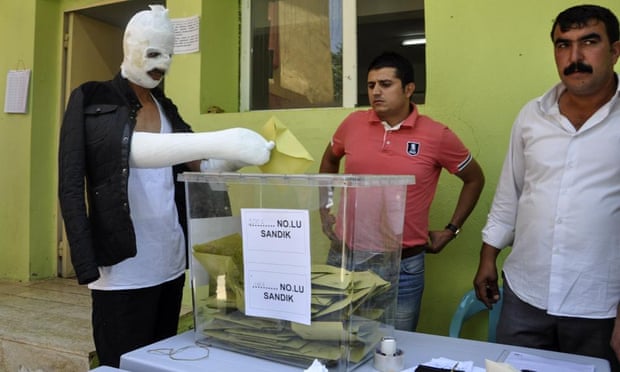
A victim of anti-HDP terrorist attacks votes in spite of all
The good news are two: on one side the theocratic reactionary AKP of Erdogan has lost the majority and won't be able to reform the constitution in favor of his theocratic ideals, on the other side the leftist internationalist People's Democratic Party (HDP), which gathers Kurdish and Turkish activists alike and the only party presenting a truly progressive program, has breached the extremely high 10% threshold and reached 13% of the vote, rallying many people, particularly in the ethnic-Turkish areas, that would have otherwise not voted or maybe picked up the lesser evil of the Kemalists (CHP), who in this poll gathered 25% of the vote.

The bad news are that the other fascist party, the ultra-nationalist MHP (whose youth or militant branch are the feared Grey Wolves: your usual bonehead nazis in Turkish version), becomes third force with 16%. It is very possible that both fascist parties form a government coalition, which will mean no significant change in the extremist policies that Turkey is prosecuting both inside and outside its borders in the last times. 

The results in terms of seats in the Grand National Assembly are:
  • AKP: 255 (-72)
  • CHP: 135 (=)
  • MHP: 82 (+29)
  • HDP: 80 (+51, compared with 29 Kurdish nationalist delegates who joined the party after its formation but were elected as independents).
Overall it is a notable turn to the left by 51 seats (almost 10% of the Assembly) but there is obviously a long way to go yet. 

In any case I have to congratulate the HDP comrades for their notable success and for opening the door of hope in the Turkish state. Themselves see this breakthrought as a first step for maybe even victory in the upcoming elections.

Main data source: Naiz Info[es].


Update (Jun 12): HDP performance by geography

Results obtained by Peoples' Democratic Party (HDP) by province.
     0-10%        10-20%        20-30%        30-40%        40-50%        50-60%        60-70%        70-80%        80-90%

While the support obtained by the HDP outside Kurdistan was important, notably in Istanbul, Izmir and Cilicia, as well as in the Alevi (crypto-Armenian) province of Tunceli, it is apparent that most ethnic Turkish voters remained cautious about it preferring other opposition choices such as the CHP (mostly in the West) and MHP (mostly in the interior).

I find intriguing the high support for the HDP in the provinces bordering Armenia that are not usually considered to dominated by the Kurdish ethnicity: Kars, Ardahan and even Erzurum. It seems apparent that other ethnic groups, be them Azeris or crypto-Armenians (whose actual numbers are not really known) or even Turks have decided it was their party of choice.

The support for the HDP in Turkey proper was clearly concentrated in the most progressive urban provinces, where the popular uprisings against Erdogan have been strongest.

See other maps at Wikipedia. The AKP still commands strong support in rural Anatolia, being also the only Turkish nationalist party with some serious presence in Kurdistan itself.


Update (June 12): S. Demirtas (HDP) calls for a radical democracy.

Relevant post-election article by the hand of the Turkish co-leader of the HDP at LINKS International.

The introduction (by LINKS) underlines that the HDP got all seats in six Kurdish provinces, as well as eleven seats (out of 88) in Istanbul (the largest West Eurasian city and the fifth largest on Earth), that 40% of its MPs are women and that it fielded the only openly gay candidate, as well as many members of ethnic minorities (not just Kurds, also Yezidis, Armenians and Assyrians).

Demirtas speaks for democracy, transparency, peace, tolerance and respect, freedom, ecology,  education, a greater role for youth and women and worker class organization. In this sense he promises the setting up of "people's assemblies" and other popular organisms to control the state and force the fascist hand of Erdogan.

Thursday, June 4, 2015

Wikileaks release alarming documents on yet another secret treaty to destroy democracy

If we were already most worried about the twin secret treaties TPP (Trans-Pacific Partnership) and TTIP (Transatlantic Trade and Investment Partnership), the new revelations of Wikileaks about the TiSA (Trade in Services Agreement), another secret treaty negotiated by the big corporate lobbies and their political sockpuppets in the EU, the USA and 23 other states* can only add to our state of near-panic. 

All these treaties are designed to be, much like the EU itself, true constitutions of the Western Capitalist Empire (NATO-plus), enshrining oligarchic privileges against the democratic will of the peoples, who are not supposed to be legally able to challenge them or their extensions. In all these constituent treaties corporations enjoy all rights, while citizens and peoples are denied them altogether: they are nothing but globalist corporate fascism, they are the legal pillars of a new more polished version of the Empire of Evil lead by the USA - or should I say Wall Street?

This is the Dictatorship of the Bourgeoisie that Marx and others alluded to. In our recent history, the class struggle in its various forms managed to force the partial humanization, democratization of this dictatorship, achieving conquests like universal suffrage, human rights, social services, etcetera. However in the last decades we are facing a dramatic counter-attack by the globalist bourgeois oligarchy, organized around the USA and its imperial structures (NATO notably) and these treaties are true legal obstacles set in the path of democracy and popular sovereignty, so you are forced, for example, to eat transgenics without even knowing what they are, so your city, region or state is forced to privatize public services, even against the common interest and implying loses for the public budget, so, in the end, the state and other elect institutions are forced to become vassals and tributaries of the global megacorporations of the ilk of Monsanto, Exxon-Mobile or Goldman Sachs. 

Some would argue on "corporation" key but the reality is that all these belong to a handful of actual individuals and families, whose names may or not be known, who do form an oligarchic class, an elite subclass within the wider bourgeois class. These few dozens of mega-privileged vampires of the ilk of Rotschild, Rockefeller, Soros or Murdoch, control much of our planet and our lives (survivals should I say?) and are determined to increase even more their share of the cake, share that has only been growing and growing since the time of Thatcher and Reagan, when the self-control provisions established for the Cold War (the so-called welfare state, in which workers were allowed to get a slightly expanded share of the cake) were dismantled. 

It is indeed a global class war, as Murdoch, as speaker of his super-class, acknowledged, adding that they, the mega-rich, were winning it. Of course that means that we, the 90%, the worker class are losing it and becoming totally disposable slaves. 

Only the most determined class struggle ever can spare us and our children the horrible destiny that awaits under this ultimate dictatorship of the bourgeoisie, the horrible destiny that is already largely happening to us. This class struggle begins, as every struggle, with overcoming the denial phase and acknowledging that, indeed, we have a big problem, a huge parasitic cancer that may even destroy Humankind as a whole. It is happening now and we have little choice but to stand up and stop it.

______________________________________________________________
*TiSA partners are: the European Union, the USA, Japan, Canada, Australia, New Zealand, South Korea, Taiwan, Hong Kong (autonomous within China), Switzerland, Iceland, Norway, Turkey, Israel, Pakistan, Mexico, Colombia, Peru, Chile, Costa Rica, Panama, Paraguay, Uruguay, Mauritius and Liechtenstein.